Cyberthreats/Incidents

Infrastructure of trust: the economics and security advancements of dark web forums

Kulishenko Alisa

Kulishenko Alisa

Head of International Analytics Group, PT Cyber ​​Analytics

Belei Artem

Belei Artem

Senior Analyst, International Analytics Group, PT Cyber Analytics

About this study

Dark web forums are the underground of the cybercrime ecosystem, where different groups and anonymous users exchange information, discuss tradecraft and attack techniques, sell stolen data, and share the results of their operations. These closed online platforms operate mainly on anonymity networks such as Tor to maximize privacy and resist external monitoring.

Analyzing dark web forums helps cybersecurity practitioners understand how criminal communities are structured, how members interact and share knowledge, and what trends are shaping underground markets and the evolution of cyberthreats. Grasping how these sites operate, the technologies and safeguards they use, and where illicit markets are heading enables more proactive defense: anticipating potential threats, improving monitoring tools, and disrupting attacks in their early stages.

This study presents an analysis of both the security controls and the economic structures that underpin dark web forums.

Study objectives:

  • Analyze the architecture and technical safeguards used by dark web forums.
  • Identify trends in the development of dark web forums.
  • Show how defense mechanisms on dark web forums function as part of an ecosystem and how they are technically advancing, along with how these forums are organized economically.
  • Provide conclusions about where protection and anonymization techniques for dark web forums are headed.

The study draws on data about both active and shuttered dark web forums. Sources include Positive Technologies in-house research, leading cybersecurity vendor reports, forums popular within the cybercriminal community, publicly available information from government security and law enforcement agencies, and Telegram channels run by cybercrime groups and hacktivists.

This study is intended to inform companies, public-sector organizations, and individuals tracking the current state of security in the realm of high-tech cybercrime about the technical and economic maturity of dark web forums, including how they secure and monetize their platforms. These insights can help readers proactively hunt for threats and design an effective organizational defense. Definitions for the terms used in this study are available in the glossary on the Positive Technologies website.

Our incident database is updated on a rolling basis. Note that details about some incidents may appear well after the underlying cyberattacks occurred.

Summary

  • As dark web forums move away from standard CMS platforms toward custom or hybrid implementations, technical analysis and vulnerability discovery become more difficult. Analysts have to tailor their tools to one-off architectures and bespoke code.
  • Layered architectures that use storefronts1,mirrors2, and proxies make forums more resistant to monitoring and blocking. In response, law enforcement and threat intelligence teams need to link mirrors to one another, correlate attacker infrastructure with attribution signals, and examine secondary technical indicators.
  • Administrators' use of VPNs, JavaScript challenges3, and similar controls effectively limits automated scraping. Analysts must craft more careful evasion techniques for these anti-bot defenses to avoid being blocked or flagged.
  • Multi-level access controls, community vetting, PGP-based verification, and minimal logging raise operations security (OPSEC) and make infiltration harder. As a result, investigations pivot from strictly technical analysis to examining behavior, social networks, and communication patterns.
  • When administrators rigorously follow OPSEC, it becomes harder to unmask key actors. Analysts must blend techniques such as behavioral analysis, infrastructure monitoring, and metadata tracking.
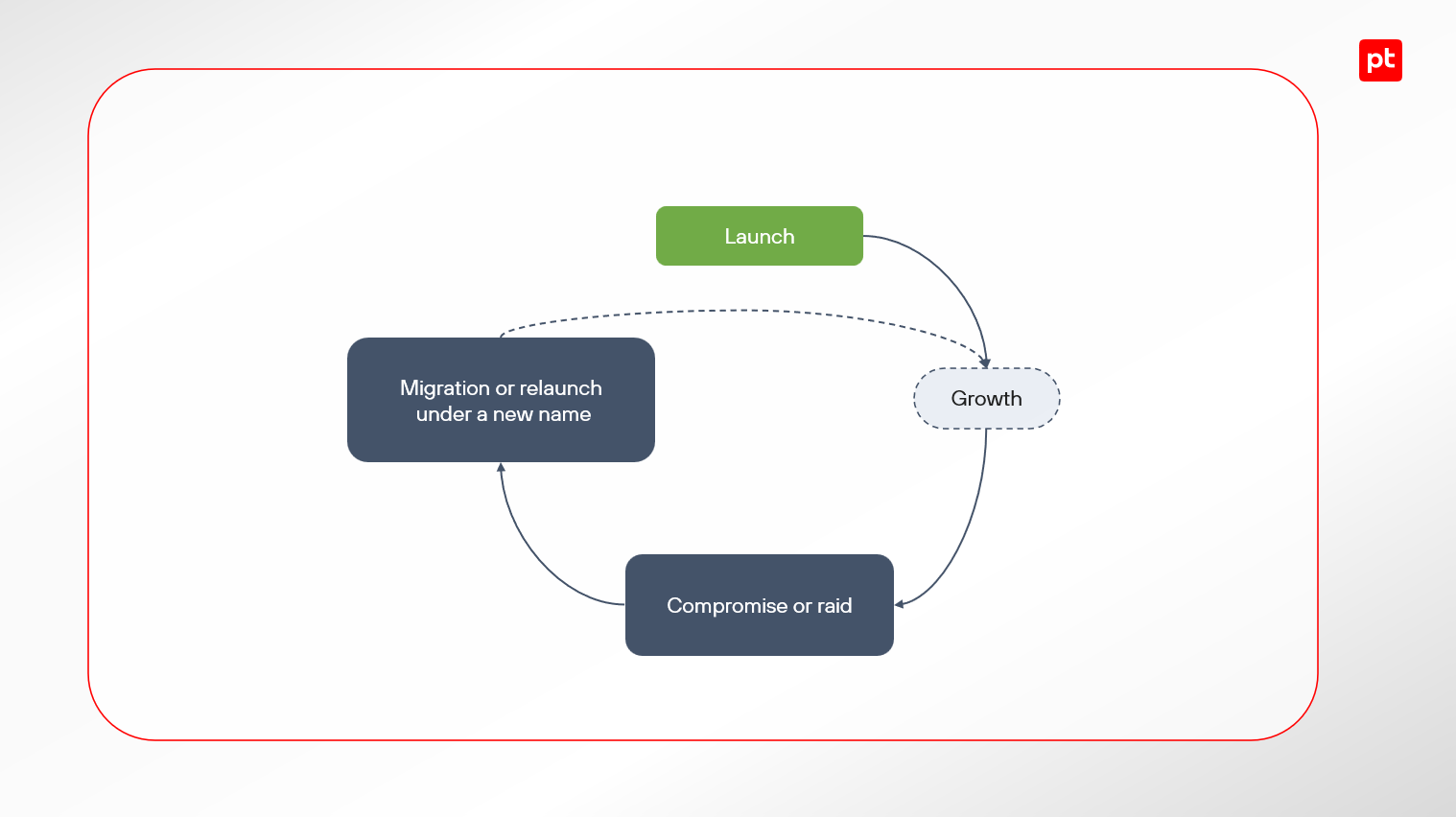
  • Dark web forums tend to follow a recurring lifecycle: growth → compromise or takedown → migration or relaunch. This fluid environment requires threat intelligence teams to keep sources continuously updated and to react quickly to platform moves.
  • Short-lived forums that run only for a few months lower operators' exposure. Analysts must monitor platforms that vanish quickly and forecast their likely rebrands or successor instances after closure.
  • An evolutionary "survival of the fittest" dynamic means only the most technically robust and well-managed forums persist. In response, cybersecurity practitioners need continuous upskilling and frequent refreshes of investigative tradecraft.
  • Today's dark web forums are increasingly distributed, agile, and technically sophisticated, which reduces their vulnerability and makes them harder to track. For cyberthreat intelligence, this demands nonstop tooling updates, a blend of technical and behavioral analysis, and adaptation to a fast-moving infrastructure where only the most resilient, well-organized platforms endure.

1A storefront is a site section or page used to present offerings and draw in visitors. For dark web forums, this can be a public web page that links to other pages.

2A mirror is a full or partial replica of a website hosted under a different URL.

3A JavaScript challenge is a test that verifies that the client's browser can run JavaScript, helping separate real users from browserless bots.

Introduction

Dark web forums sit at the core of the cybercriminal ecosystem. They serve as venues where threat actors trade know-how, sell stolen data, share malware, and coordinate illicit operations. Participants gain relative protection, anonymity, and a sense of membership in a closed community.

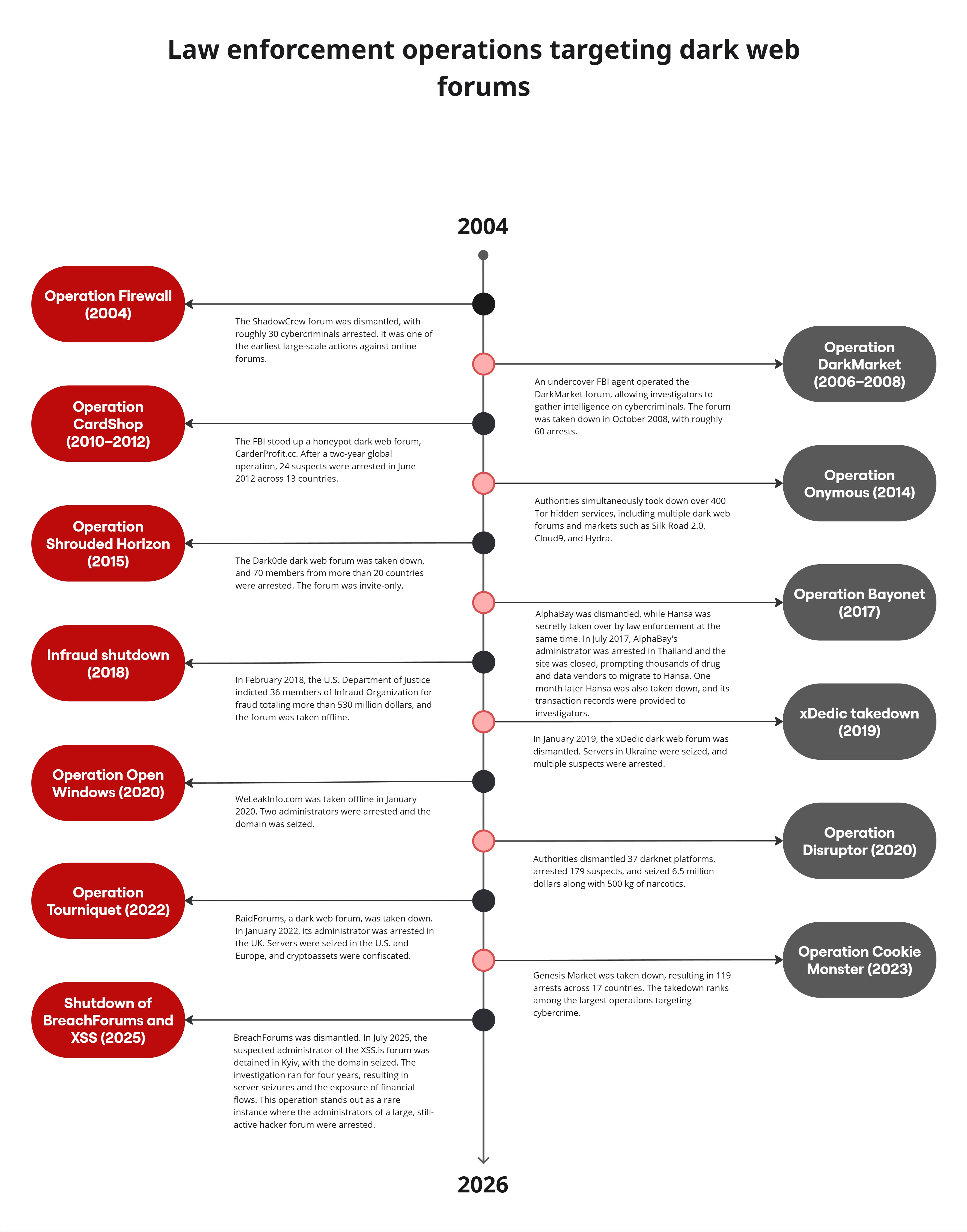
These underground platforms are constantly changing. Some vanish, others relaunch under new brands and new admins, and some mature into more technically sophisticated structures. The primary driver of this churn is enforcement action by government agencies and international low enforcement coalitions targeting cybercrime. Operations led by organizations such as Russia's FSB, the U.S. FBI, Europol, Interpol, and national cybersecurity centers frequently result in admin arrests, server seizures, domain takedowns, and leaks of user databases. Yet the effects are seldom permanent. Closing one forum often catalyzes the emergence of a successor that is more resilient and better defended. A notable feature of these forums is the advanced state of their technical security measures.

Figure  1. Timeline of law enforcement actions targeting dark web forums
Figure 1. Timeline of law enforcement actions targeting dark web forums

A telling example is the takedown of the well-known RaidForums, which was followed almost instantly by its successor, BreachForums. After BreachForums was taken down, members tried to resurrect the community yet again, adopting new security protocols and revised governance models. These cases highlight a recurring regeneration cycle in the cybercriminal ecosystem, where each iteration adds more advanced defensive controls and raises the bar for anonymity.

This pattern captures both the internal dynamics of dark web forum operations and wider trends in cybersecurity and cybercrime countermeasures. The contest between cybercriminals and defenders functions like an arms race. Each effective enforcement action spurs threat actors to roll out new tools, architectures, and safeguards. Over time, a tenuous balance emerges: as defenders harden controls, hunt threats, and disrupt cybercriminal operations, adversaries adapt in response, driving the ongoing evolution of the broader cybercriminal infrastructure.

Whereas early dark web forums were rudimentary websites, sometimes even hosted on the open internet, today's forums operate as complex distributed platforms with layered infrastructure, APIs, moderator bots, built-in verification, and tiered access models.

This part of the study analyzes how modern cybercriminal forums defend their infrastructure, the technical and organizational controls they employ to maintain anonymity, resilience, and participant trust, and how their evolution mirrors broader cybersecurity dynamics in which attackers and defenders continually adjust to one another.

Architecture and technological evolution

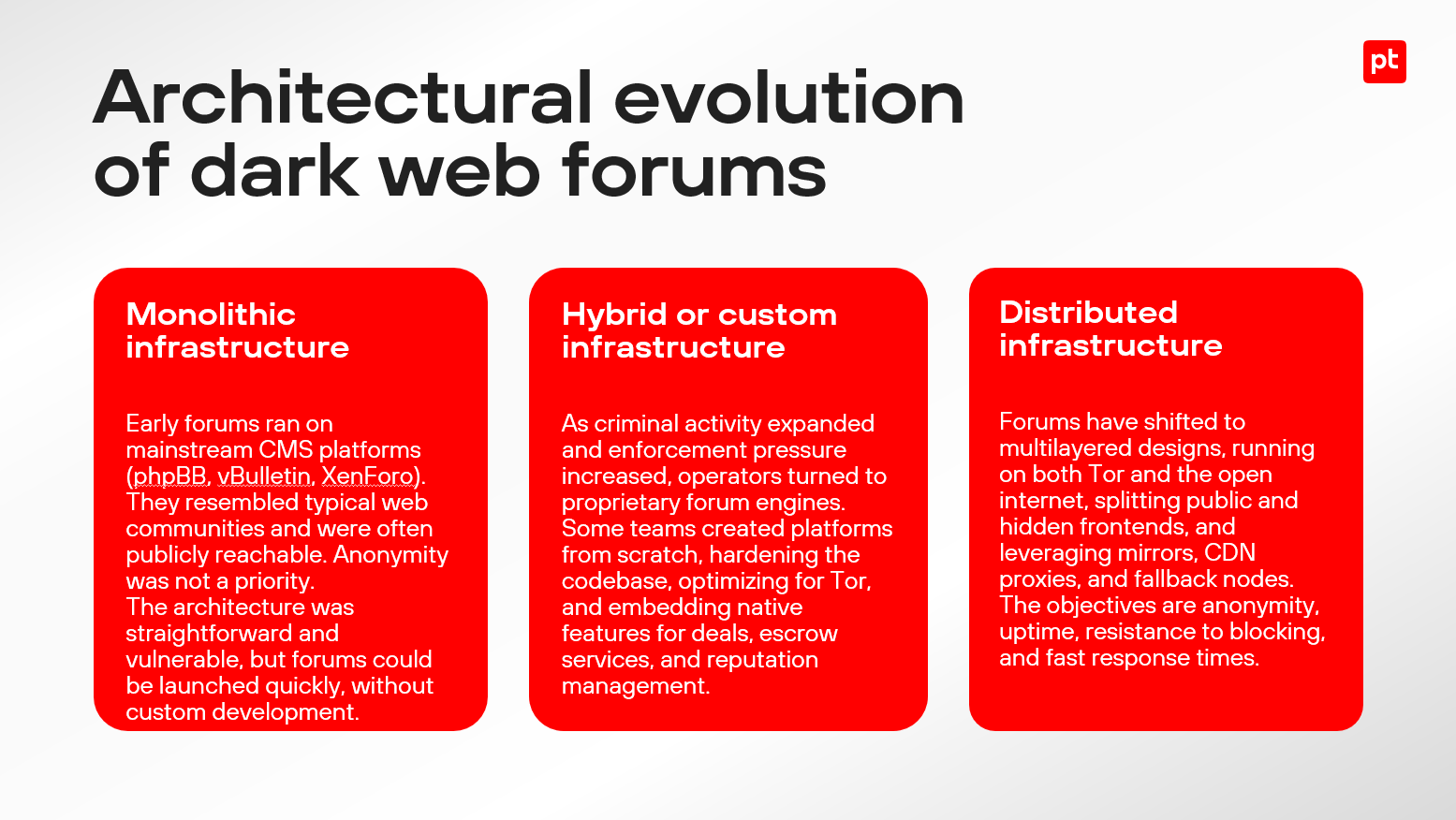
Figure  2. Architectural evolution of dark web forums
Figure 2. Architectural evolution of dark web forums

Early underground forums were architecturally simple. They also did not prioritize complete anonymity. Functionally, they resembled ordinary topic forums and initially drew little law enforcement attention. Administrators relied on turnkey platforms like phpBB, vBulletin, and XenForo. Over time, many platforms moved to Tor hidden services. This approach enabled rapid deployment but came with downsides, including well-known vulnerabilities and low performance.

Platform

Type

License

Features

phpBBFree (open source)GNU GPLOne of the oldest and most widely used free forum platforms. 
Extensive mods and themes, a conservative UI
vBulletinCommercial platformPaid licenseFormerly the go-to choice for large forums. 
Rich feature set, aging codebase, costly license
XenForoCommercial platformPaid licenseCreated by former vBulletin developers. 
It offers a modern UI, strong performance, an active community, and support

Table 1. Widely used turnkey forum platforms

These platforms provided the base on which forum capabilities expanded. By the 2010s, dark web forums commonly featured sections for trading stolen data and malware, along with escrow4 mechanisms and user reputation systems much like those on legitimate forums.

As the scene matured, several major forums recognized the constraints of off-the-shelf CMSs and migrated to custom platforms tailored to cybercriminal workflows. This brought clear benefits: bespoke code is harder for law enforcement to analyze and exploit, and it can be architected from the start around user anonymity. Some forums embedded capabilities valued by threat actors, including escrowed deals, encrypted messaging, and onboarding checks for newcomers. A prominent example is the English-language forum Dread. Its admin built the software from the ground up, intentionally omitting JavaScript and tuning performance for Tor. After real-world testing, the codebase was reworked and improved to make the platform more stable. Dread demonstrated that a purpose-built CMS can better satisfy dark web operational demands than generic platforms, although general-purpose solutions remain in use on many forums.

With the growth of cybercrime and rising user numbers, forums moved away from monolithic Tor-only setups. Today, many large platforms adopt multilayer architectures to strike a balance between user anonymity, performance, and resilience.

4An escrow is a neutral third party that safeguards funds or other assets during a transaction and releases them only after both sides have met all agreed terms.

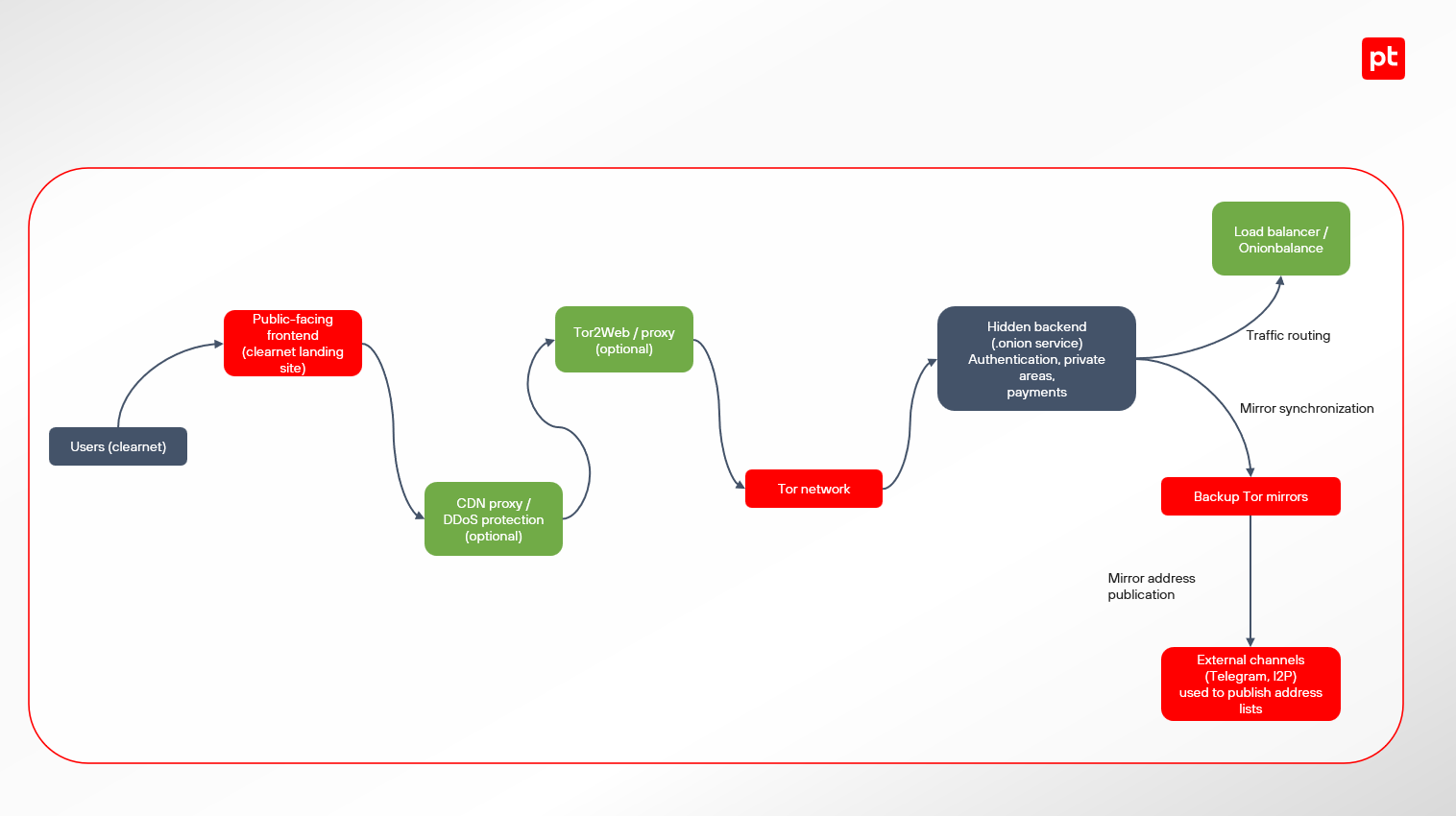
Figure  3. Hybrid architecture of a dark web forum
Figure 3. Hybrid architecture of a dark web forum
  • Concurrent Tor and clearnet presence. Modern forums are often accessible both via Tor (.onion) and the regular internet (clearnet). For instance, the XSS forum operated simultaneously on Tor and on a public .is mirror, broadening its reach. The Exploit forum likewise maintains a dark web presence while offering clearnet access. This hybrid approach boosts availability by allowing access without a Tor browser, which helps attract new users and increases traffic, but it also weakens anonymity. In such deployments, admins must rigorously mask the origin server's IP, commonly using CDN reverse proxies or Tor2Web gateways. Some forums rely on DDoS-Guard or Cloudflare in onion service mode for attack mitigation. Still, many threat actors consider placing a hidden service behind Cloudflare to be unsafe and ill-advised.
Figure 4. Clearnet landing page of a dark web forum with links directing users to the forum's Tor site
Figure 5. Transition from a dark web forum's clearnet landing page to its Tor site
  • Frontend storefronts with hidden backend panels. To reduce risk, many dark web forum admins separate the public-facing surface from the restricted core. The clearnet storefront may host general info, news, rules, and even limited discussion threads that do not reveal sensitive details. If that public node is compromised, for example via domain seizure, the forum's content and user identities are not exposed. This design illustrates the move away from early monolithic setups toward hybrid architectures. The goal is to combine clearnet performance and SEO visibility with Tor's anonymity for real illicit transactions. For instance, some dark web markets operate open aggregator sites for product discovery and then redirect buyers to Tor for checkout. Forums can mirror this pattern by posting public notices with contact details while keeping the substantive discussions hidden.
  • Multiple hidden mirrors and backup nodes. With sustained law enforcement pressure, forum admins proactively plan for domain or server loss by maintaining multiple onion endpoints and periodically announcing them through trusted channels. They also register fallback clearnet domains. This practice enables rapid audience migration to new addresses. In addition, current mirror lists are frequently maintained on external channels, including Telegram and I2P-hosted files. Many forums replicate announcements across their own sites as well as in messaging apps and on Discord servers.
Figure 6. Up-to-date mirror links displayed on the XSS dark web forum pages
Figure 6. Up-to-date mirror links displayed on the XSS dark web forum pagesNew message | Create thread | We — online
Figure 7. Up-to-date mirror links displayed on the XSS dark web forum pages
  • CDN proxying and load balancing. To increase reliability, major forums often interpose a proxy layer between clients and the origin server. This layer may use a CDN for static assets and load balancers to fan traffic out to multiple nodes. In the clearnet, providers like Cloudflare handle this role; in the dark web, tools such as Onionbalance distribute traffic across several hidden services. Cloudflare is also used in some cases. In practice, the selection is driven more by hosting location than by the forum's theme.

In short, forums evolved from simple monolithic deployments to hybrid, distributed architectures. Where a single onion server's failure or compromise once killed a forum outright, today the stack is layered: a public tier that can be sacrificed without damaging the core, a hidden tier that houses the Tor-protected core services, and a backup tier with preprovisioned alternatives. This architecture increases fault tolerance and resilience to takedowns and blocking. At the same time, it makes administration more complex, requiring mature DevOps practices and strong OPSEC, traits common to the longest-running forums. The XSS forum is a case in point: its longevity has been attributed to contingency hosting and the admin's high OPSEC standards, which preserved secrecy and user privacy until recently.

Anonymity and security technologies

Security and privacy are the core principles of dark web forums. As these forums matured, admins and users have had to trade off between strong anonymity and practical usability. This section examines the main technologies that provide anonymity and security for these platforms.

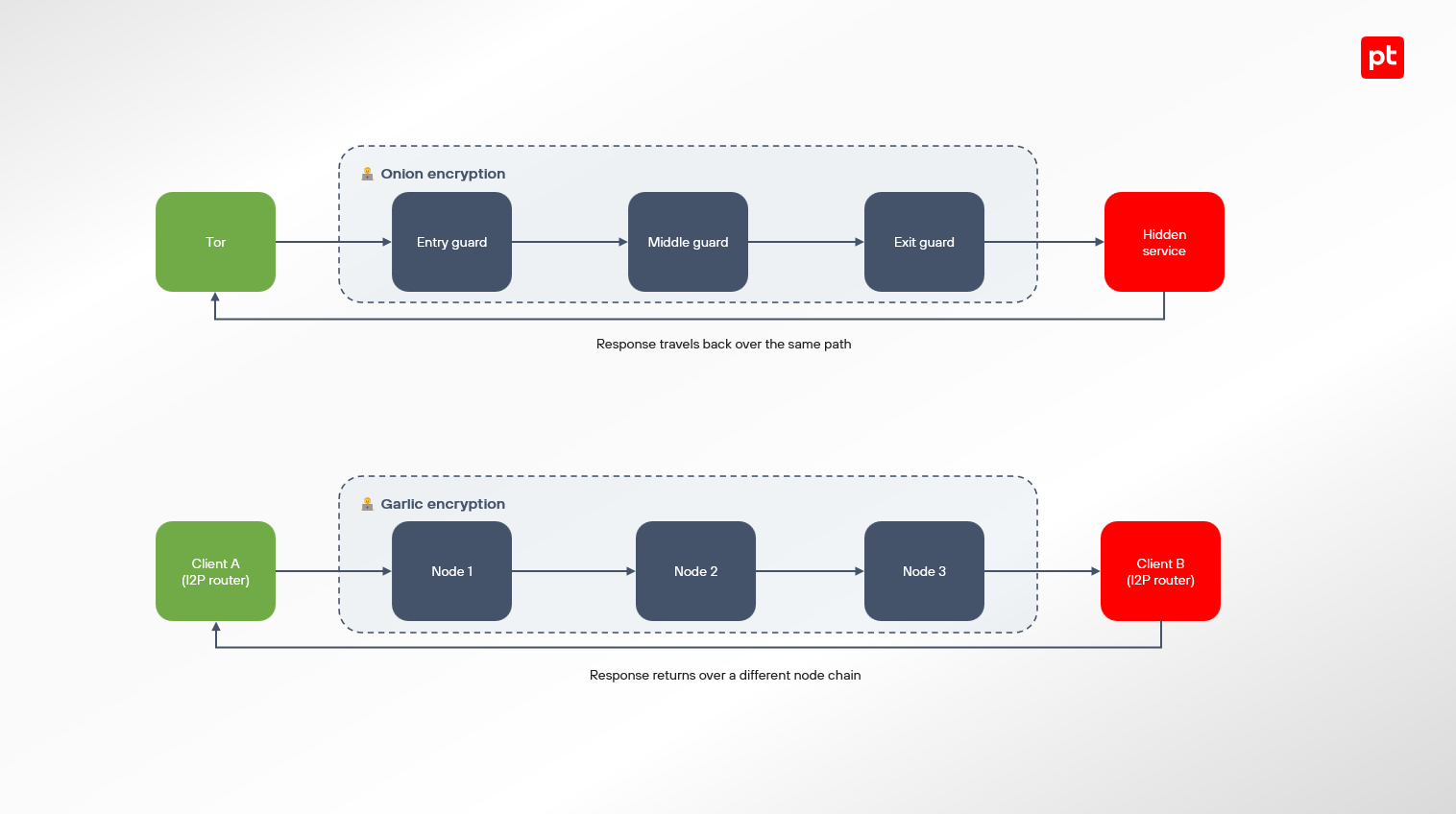
Baseline anonymity typically relies on specialized networks, most notably Tor and, less frequently, I2P. Tor forwards traffic through several randomly selected relays with layered encryption, which makes it exceptionally hard to trace a request back to its source.

Figure 8. How Tor and I2P work

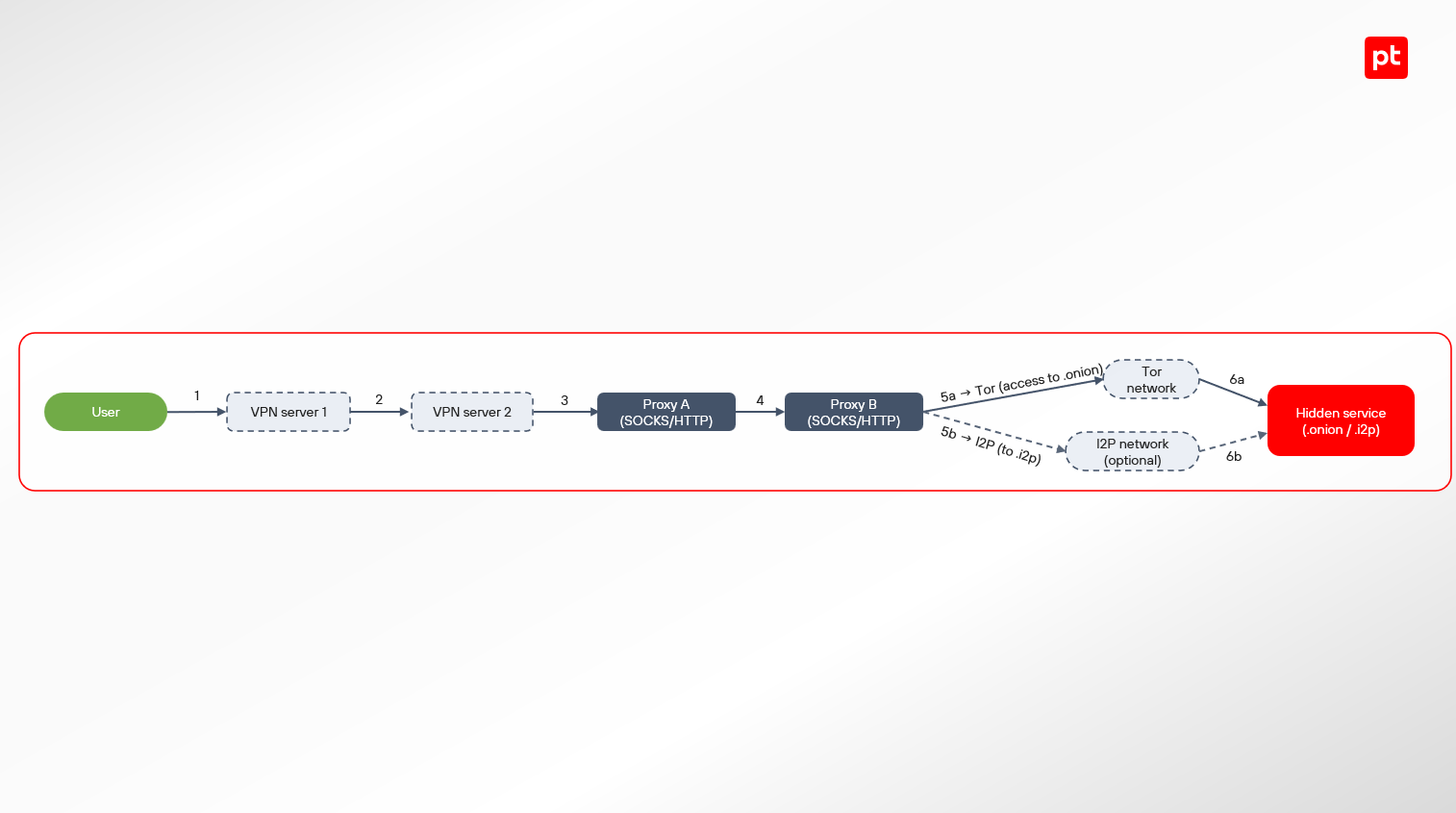
I2P follows a similar model, forming a distributed anonymity network overlay. Tor and I2P effectively mask the real IP addresses of users and servers, which significantly hinders efforts to identify forum administrators. Many advanced users combine several methods: they may access a forum through a cascade of VPNs before Tor, or use ProxyChains to chain multiple proxies, and even run traffic in parallel over Tor and I2P. This multi-hop setup lowers deanonymization risk in case any single component is compromised.

Figure 9. ProxyChains + VPN + Tor or I2P setup

Studies show that threat actors frequently layer Tor with VPNs and other anonymizers to enhance privacy. Forum administrators harden their setups as well: hidden services are deployed on isolated hosts, and any traffic originating from the clearnet side is funneled through environments such as Whonix or purpose-built gateways, ensuring there is no direct path to the origin server.

Forums defend against more than just law enforcement. They also try to block unwanted scraping, meaning automated content collection by competitor crawlers or security researchers. To that end, they employ multi-layered anti-scraping controls:

  • JavaScript challenges. Because many basic bots do not run JavaScript, forums may issue a client-side task on page load that only a real browser can complete. This resembles Cloudflare's Under Attack mode, which inserts a short computation delay before the site renders. Dark web forums often use simpler versions, for example requiring the client to compute a hash or solve a trivial JavaScript puzzle before content is returned. If the script is not executed, access to the page is withheld, which blocks simple scrapers. However, more advanced bots that drive a headless browser can still execute the JavaScript and bypass this control.
  • Custom CAPTCHAs. While CAPTCHAs are a standard anti-bot control, dark web forums cannot rely on Google reCAPTCHA because its verification flow does not operate on .onion sites and may risk deanonymization. Instead, forums devise their own challenges. Users may be asked to solve a simple puzzle, submit the outcome of an arithmetic task, answer a niche cybersecurity question, or transcribe text from a locally generated distorted image. Sometimes the challenge involves a live exchange with an admin in chat. Some forums even use quiz-style checks about slang or forum rules, which makes it extremely difficult for bots to guess the answer. These unconventional filters slow down sign-ups and bulk account creation for spam. They also throttle scraping5 by forcing even sophisticated crawlers to integrate OCR modules.

5Scraping is an automated technique for extracting, analyzing, and structuring data from different sources, typically websites.

Figure 10. Example of a CAPTCHA on a dark web forum
  • Rate limiting and hidden tags. Another approach is to monitor account behavior and automatically block suspicious activity. For example, if a new user starts fetching hundreds of pages per minute, which is characteristic of scrapers, access can be temporarily suspended or a new CAPTCHA challenge issued. Forums also implement response delays, per-session tokens, and injected chaff such as invisible text to watermark content and trace content leaks. Admins can embed user-specific hidden tags in the HTML. If the content later leaks, those tags reveal which account scraped it and should be blocked. Together, these behavioral filters significantly hinder automated crawlers.
Figure 11. HTML tags
  • Encouraging user engagement. Certain posts or threads are not visible on first visit. The forum requires the user to interact (add a reaction or comment in the thread), after which the content is displayed.
  • Restricting user access. Many forums organize content into tiers: open sections visible to any registered user, restricted sections limited to vetted members, and private sections accessible by invitation or paid subscription, effectively placing them behind a paywall.

A paywall is an access control system for digital content that allows users to read a limited amount for free and requires a payment or subscription to view the remaining material.

Figure 12. Paywall on a dark web forum

For example, on Exploit and FreeHacks, new users see only a limited subset of content and must build trust before gaining access to restricted sections. Registration has also grown more rigorous. Admins or moderators may run a kind of interview, asking questions such as where the newcomer learned about the forum.

Figure 13. Conversation about buying an account registration on the RAMP forum
Figure 14. Example of a proof-of-work challenge used to unlock a BreachForums account

Researchers observe that gaining access to dark web forums is frequently a lengthy process that relies on invites, verification steps, filling out a profile, and moderator approval. Consequently, much of the high-value content sits behind successive access gates, making it hard for new outsiders to reach all sections immediately.

Figure 15. Notification regarding a user's suspicious behavior
Figure 15. Notification regarding a user's suspicious behaviorPlease note that this user has been blocked. **** said: And respond on-topic, if you have anything to respond to.   How should I respond to abstract and general questions? They sound like they're being written by a journalist, or even a police officer.

Operators of dark web forums are prime targets for law enforcement agencies, which is why they follow strict anonymity practices. First of all, admins and moderators use stable pseudonyms and avoid sharing any personally identifying details. Even a small slip, such as the Silk Road founder's use of a personal email on an external service, can unmask an operator. Seasoned admins therefore adopt conservative practices: no handle reuse, no reusing the same PGP key6 across sites, and a clearly defined role hierarchy. Responsibilities are commonly segmented: one person runs support, another oversees payments, and a third handles content moderation. This reduces the number of superuser accounts whose compromise could endanger the entire forum.

6A PGP key is a pair of linked keys (public and private) used in the Pretty Good Privacy (PGP) encryption system to ensure authentication, confidentiality, and data integrity.

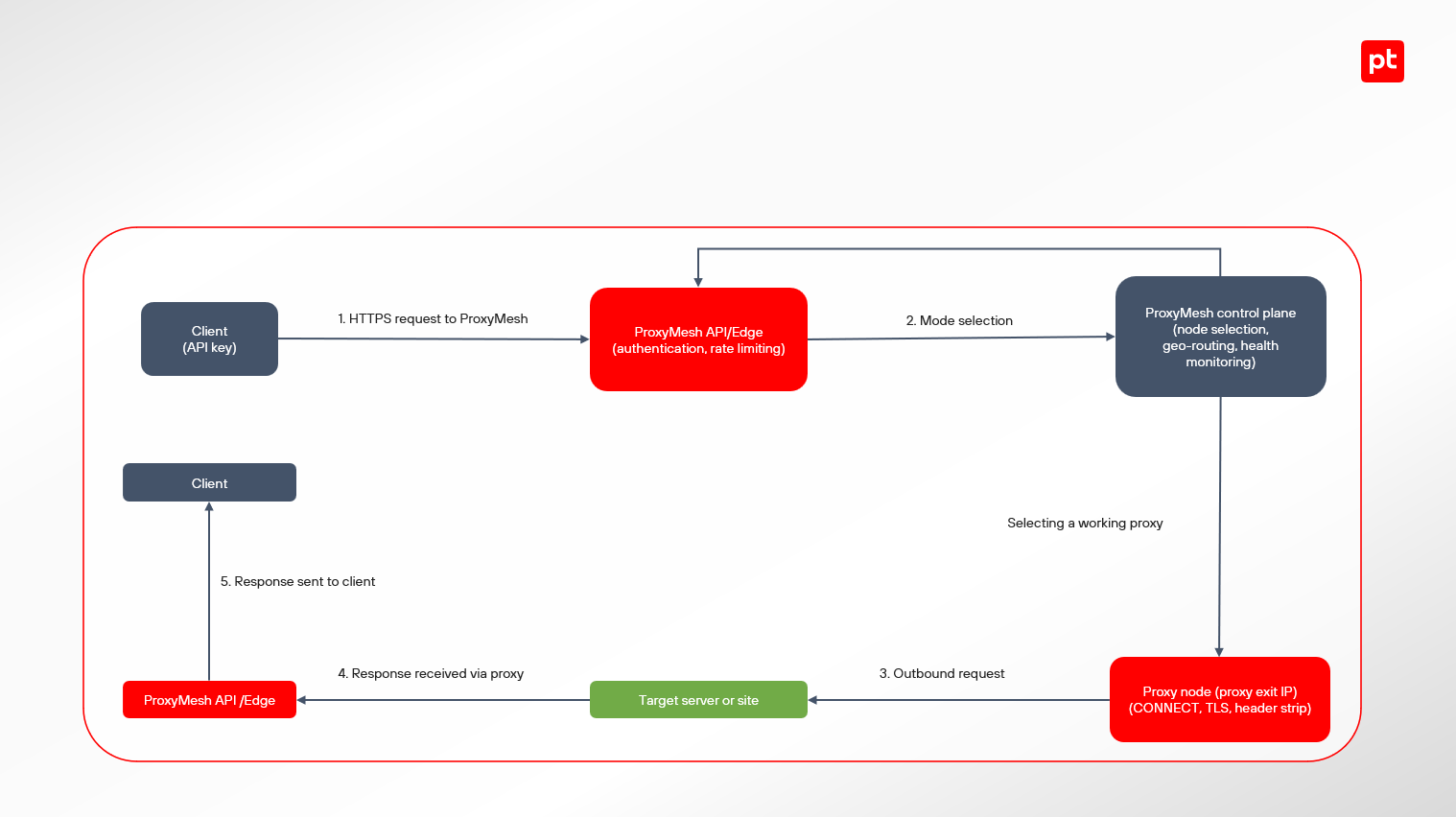
Figure 16. How ProxyMesh works

Second, admins avoid direct server access. They connect through cascaded VPN and Tor hops, often from intermediate remote hosts and sometimes via ProxyMesh (a proxy node network). To avoid exposing screen resolution or OS locale, they skip standard GUIs and instead work in a terminal environment, for example using Tails or Whonix.

Third, communities of loyal forum members serve as an additional security layer. Veteran users can detect anomalies and sound the alarm. For instance, when an admin's writing style suddenly changes, regulars will suspect something is wrong. That's what happened with XSS in 2025: after one administrator's arrest, another briefly kept an onion mirror online, but moderators couldn't verify his identity and suspected a takeover by law enforcement. They made this concern public, left the site, and founded a new forum, DamageLib. The episode illustrates that communities don't blindly trust their admins; under the threat of deanonymization or compromise, they often splinter and reemerge elsewhere. At the same time, the admins' commitment to strong anonymity makes complete trust elusive. Security is essential, but profile badges and statuses seldom reveal who anyone actually is.

Not all dark web forums maximize security. Some deliberately sacrifice anonymity to gain speed and usability. The logic is practical: mainstream users don't want to wait minutes for pages to load over Tor or to pass a check on every page. Consequently, some admins permit clearnet access (assuming visitors use a VPN) and adopt more user-friendly, JavaScript-heavy interfaces with modern design, even though this can increase the potential for compromise. Hydra is a notable example: in its later years, it introduced a mobile Telegram bot for purchases, which boosted convenience but moved activity outside Tor's fully anonymous environment. Telegram lacks end-to-end encryption in channels, ties accounts to phone numbers, and offers no reputation or escrow system. These limitations hinder operators' anonymity goals. Dark web forums often make similar trade-offs elsewhere: dropping forced PGP authentication for a simple username–password login, or exposing some content without registration to improve indexability and pull in SEO traffic.

Figure 17. Forum pages appearing in DuckDuckGo search results

In short, the landscape is varied: it spans tight-knit, invite-only forums that prioritize strict security and screening, and large public forums that lower barriers to entry despite the risks. In the end, every forum calibrates its own security–usability tradeoff and often recalibrates after leaks or law enforcement raids.

Automation, APIs, and bot ecosystems

Today's dark web forums extend beyond websites into ecosystems that integrate external services and bots. Automation improves marketplace workflows, member notifications, and cross-platform connectivity. Discord and Telegram are heavily adopted, thanks to their robust APIs and bot frameworks. Cybercriminals use them to automate sales, manage audience communications, and run illicit services, which is why these ecosystems are prevalent in underground operations. Let's examine the typical technology combinations seen on dark web forums.

Telegram plays a pivotal role on the dark web. It's easy to access, offers a degree of anonymity when paired with virtual phone numbers, and supports bots. Many forums now run their own Telegram bots and channels to expand their capabilities. For instance, beyond its web portal, Lolz.guru operates an official Telegram escrow bot for handling deals.

Figure 18. An escrow bot of a dark web forum on Telegram
Figure 18. An escrow bot of a dark web forum on TelegramOfficial Telegram channel for the forum's garant-bot **** Current link: ****

A buyer and a seller can call a bot into their chat, which then serves as an escrow and can even auto-check certain conditions. These bots reduce the need to visit the forum constantly: notifications for new messages, escrow deposits, and deal completion are delivered directly to the messaging app.

In addition to bots, advanced forums expose direct programmatic access via APIs. These can be private REST APIs or lightweight JSON/XML gateways that allow external apps to request forum data. A common pattern is marketplace integration. For instance, a forum focused on vulnerabilities might link to a separate marketplace where exploits are sold. Using the API, new marketplace listings can be auto-posted to a forum section by a bot. Conversely, a forum may publish an API that lists recent leaks, which a leak aggregator (for example, on Telegram) polls regularly to publish concise summaries for its audience.

Forums and marketplaces sometimes collaborate on integrated projects. One pattern is a single sign-on style setup: when a user registers on the forum, the forum automatically creates a marketplace wallet through an API so that the user can operate across platforms. APIs also power escrow workflows: an escrow bot can hit forum endpoints to update a deal's status to "paid" or "dispute." Together, these integrations create a cohesive stack with clear role separation: the forum builds communication and reputation, the marketplace executes transactions and payments, and a Telegram bot delivers mobility and notifications. A common Western configuration combines the Dread forum for discussion with a marketplace such as ASAP Market and a shipment-tracking bot.

Users also deploy their own bots to track topics they are interested in. Dark web forum audiences tend to be technically savvy, and most forums expose RSS or similar update feeds. As a result, cybercriminals write scripts and bots that subscribe to RSS feeds of forum sections and push real-time announcements to private Telegram chats or Discord servers. This way, participants receive near-instant alerts about new threads without having to access the forum directly. Some forums accommodate this behavior by adding a "send to Telegram" button or by offering enriched RSS feeds that include post excerpts. There are also public Telegram channels that aggregate updates across multiple forums. For instance, a leak channel might ingest feeds from XSS, Exploit, and BreachForums. This creates a shared information space in which platform boundaries become increasingly fluid.

Forum admins aren't always thrilled with this setup because automated content redistribution erodes the exclusivity of their platforms. Therefore, the most exclusive communities attempt to block or throttle auto-posting. Conversely, popularity-minded forums push their own announcements to public channels. The bot ecosystem has become so mature that cybercriminals can skip the sites entirely and still access most of the same information and services through third-party bots and channels. That raises the bar for law enforcement agencies: monitoring onion forums alone is no longer enough; they must also keep tabs on thousands of Telegram bots, channels, and groups where much of the activity has migrated.

Economic infrastructure

Large underground forums function not only as information hubs but also as economic ecosystems with cryptocurrencies at the core, flourishing trade, and specific financial rules. Most cybercriminals who use dark web forums are financially motivated, so it's worth exploring how dark web forum economics work and what technologies underpin their monetary transactions.

One of the key elements is escrow. Most major forums operate an official escrow service, either as an automated platform feature or via a moderator who acts as the escrow agent. On BHF.PRO, for instance, there's an Escrow/Deposit menu item indicating that the forum offers to hold funds until deal completion. A standard workflow goes like this: the buyer and seller negotiate in a thread or via private messages, then engage escrow and send the agreed amount to a wallet controlled by an admin or bot. If delivery checks out and both sides are satisfied, the escrow releases payment to the seller; if there's a dispute, the case moves to arbitration.

Figure 19. A separate "Arbitration" menu section on the BHF.PRO dark web forum
Figure 19. A separate "Arbitration" menu section on the BHF.PRO dark web forumRules | Forums | What's new? | Warranty | Escrow | Black list

Unsurprisingly, escrow isn't offered for free: the escrow agent charges a commission on each deal. Pricing differs across forums. Below are the most common escrow fee structures.

Fee type

Description

Amount

Percentage

A percentage of the transaction amount is charged3–5% standard; 10–15% for higher-risk deals

Fixed

A flat amount regardless of transaction size$50 per deal

Combined

Flat fee plus a percentage above a threshold$20 + 3% on amounts over $1,000

Flexible

Rate depends on transaction size3% up to $1,000; 5% on amounts over $1,000

Elevated

Higher percentage for large or disputed transactionsUp to 15%

Table 2. Escrow fee structures used on dark web forums

Escrow is frequently integrated with each user's on-site wallet. Every forum member maintains a balance they can anonymously top up with cryptocurrency, then use for escrow deposits and to pay forum fees. The model is convenient: there is no need to approve a fresh transaction for every deal. And it also forms the forum's financial spine: admins hold significant user funds (on major platforms, they can amount to hundreds of thousands of dollars in crypto). Notably, when XSS servers were seized in 2025, reports cited more than 55 BTC in user funds sitting in the forum's cold wallets. The example underscores both the volume of funds involved and the criticality of robust crypto custody.

Beyond ideological motives, profit is a major driver of dark web forums. Escrow fees are the main revenue stream. Forums also monetize via paid perks and services: monthly VIP memberships, thread bumps, ad placements, and access to restricted sections. DarkForums, for instance, offers paid tiers (VIP, MVP, GOD) that confer status plus access to private Telegram channels and leak feeds. Some sites even sell "professional" badges like "Seasoned Seller," with payments going to the admins. These features are typically delivered as integrated modules. The exact bundle depends on what the admin needs and can include the following types.

Module

Functions

Automation

Integrations, technologies

Escrow serviceSecure cryptocurrency transactions

• Automatic acceptance of payments to temporary addresses

• Deal confirmation by both parties, payout to the seller, fee collection

• Distribution of fees (to admins, escrow agent, moderators)

• Blockchain API

• Built-in wallet with an API for address generation and transaction verification

Subscriptions and subscription managementManaging paid statuses and VIP subscriptions

• Subscription validity checks (cron)

• Automatic revocation of rights upon expiration

• Renewal funded from the on-site wallet

• Granting extended capabilities

• Cron + database (MySQL, PostgreSQL)

• Admin console to manage pricing and tiers

Promotion and moderation of forum threads. Advertising and banner managementThread promotion and advertising

• Time-limited paid bumps to push threads to the top

• Rotation of banners and sponsored links

• Impression and click tracking; timers for ad expirations

• Cron

• Database logs and counters

Wallet and paymentsInternal ledger

• Auto-provisioning of a wallet for each user

• Balance synchronization via RPC

• History of transactions and fees

• Currency conversion

• Invoice generation for top-ups

• Blockchain RPC and APIs

• Exchange APIs

• Transaction database

Reputation module.

PGP authentication

User trust and security

• Post-transaction reputation scoring

• Authentication flow with PGP signature verification

• Blocking of suspicious login attempts (by IP address, behavior)

• Encrypted notifications via a PGP-enabled bot

• PGP crypto libraries

• IP intelligence and behavioral analysis

• Built-in bot

Admin panelAnalytics and reporting

• Tracking of total transaction volume and fee intake

• Export of forum-wide activity metrics

• Analysis of section-level profitability

• Configuration of limits and penalties

• Admin panel

• SQL-driven reports, charts

• Data exports via cron jobs

Bots and automationBackground jobs and notifications

• Notification bots for Telegram and XMPP

• Scheduled scripts to update reputations, archive threads, and prune stale topics

• Monitoring of security logs

• Telegram API / Jabber API

• Cron + system

• Security tools (fail2ban, logwatch)

API integrationsConnecting to external services

• Webhooks for inbound payments

• REST API for mobile apps and third-party clients

• PGP key verification, exchange rates, notifications

• REST interfaces, webhooks

• External services (PGP key verification, cryptocurrency exchange, notifications)

Table 3. Automation modules for dark web forum operations

Figure 20. User status on a dark web forum
Figure 20. User status on a dark web forumRegistration | Last activity | Messages
Figure 21. User status on a dark web forum

This mixed revenue model lets a platform earn money, defray hosting and DDoS mitigation costs, and incentivize moderators.

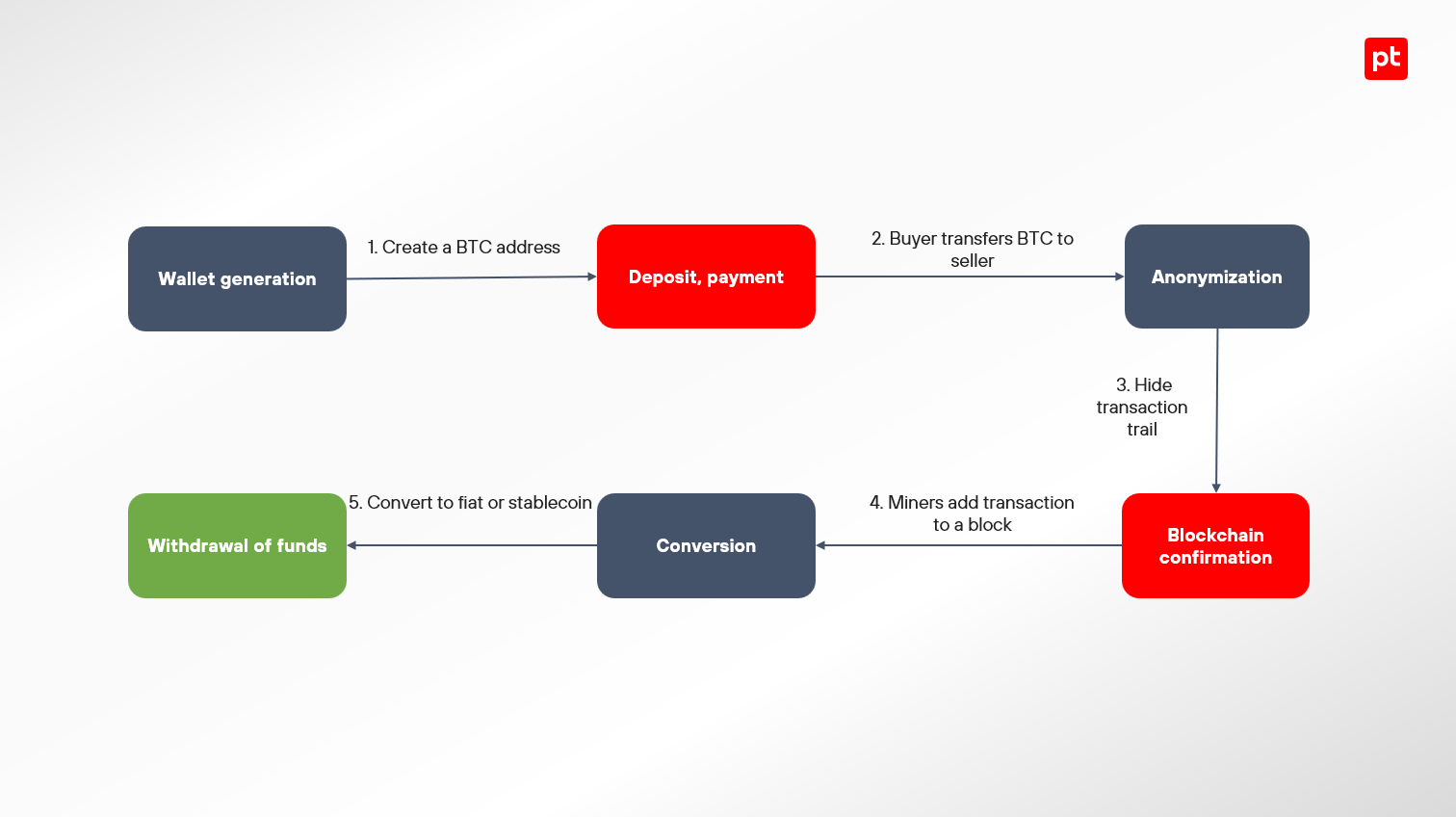
While all transactions on dark web forums occur in cryptocurrency, choosing which coin to use balances transparency against privacy. As banking and crypto mature, forum economics grow more intricate. Automation now extends well beyond a basic on-site wallet: major platforms employ multisignature scripts, automated disbursements, and blockchain API–based balance checks. A typical flow is: upon deal creation, the forum issues a unique Bitcoin deposit address via the Bitcoin Core API. Once the deposit lands with enough confirmations, a bot flags the deal as "deposit received" and alerts both parties. After deal completion, the bot transfers BTC to the seller's address, net of fees. All of this happens without human involvement, instantly, and strictly according to predefined rules. Human arbiters intervene only to resolve disputes. This level of automation bolsters user trust, signaling that payouts are handled by code, and no admin can run off with the crypto.

The revenue model includes the following components.

Revenue source

Mechanism

Amount

Comments

Sales fees

Percentage of each marketplace deal2–10% of the deal amountSale of databases, access credentials, 0-days; deals ranging from $100,000 to $250,000

Paid subscriptions

Payment for access to restricted sections$10–50 per monthVIP forums, private leaks, exclusive data

Premium accounts

Extended privileges, lifted limitsUp to $2,000 per yearAPI access, bulk data pulls, anti-spam bypasses

Advertising

Placement of banners (posts) on the forumFrom $50 per monthSale of stealers, botnets, RaaS

Escrow services

Holding deposits until deal completion4–10% of the deal amountAdministrators often oversee high-value transactions

Table 4. Monetization of dark web forums

Bitcoin has historically been the dark web's default currency: it's ubiquitous, and users know how to use it. While BTC offers strong asset security, its public ledger exposes transaction flows and wallet linkages, undermining anonymity. Investigators and blockchain analytics firms have repeatedly deanonymized actors by tracking on-chain movements, which in turn incentivizes the use of coin-mixing services to obfuscate funds.

Figure 22. Withdrawing funds via BTC

From the mid-2010s onward, privacy-focused cryptocurrencies, most notably Monero (XMR), gained momentum. Monero obscures nearly all transaction metadata. By 2021–2022, this cryptocurrency was seeing wider adoption across the dark web. Some forums rolled out Monero escrow or encouraged off-site settlement in XMR. Even so, it hasn't fully displaced BTC: Bitcoin remains the favorite among cybercriminals due to its convenience and liquidity. Today, small transactions and forum service payments are typically done in BTC, while high-value deals are often conducted in XMR. Stablecoins like USDT are rising globally, but remain rare on dark web forums due to their ties to governments and lower anonymity. Other notable coins include Litecoin (LTC), which is sometimes used due to its low fees. Overall, no alternative has approached BTC and XMR in popularity.

Even with the clear model and processes, exceptions occur. There have been instances where the escrow agent turned out to be a fraudster and withheld funds. In one widely cited case, an official escrow agent serving two large forums kept roughly $170,000 by reneging on four deals. While damaging to trust, such events are rare on forums with strong reputations. On the whole, the escrow/fee model works: escrowed trades may represent up to a third of all transactions (exact figures are elusive because many terms are negotiated privately). The pattern suggests these forums have developed marketplace-like mechanisms of self-regulation and trust, with the economic layer engineered as carefully as the technical one.

Anti-infiltration measures

Underground forums face a persistent risk of infiltration, as agents from law enforcement, cybersecurity researchers, or rivals join to gather intel or disrupt operations. In response, forums deploy countermeasures spanning community governance and technical security controls.

Closed forums rely on tiered access. Members are categorized not only by interests but also by level of trust. Newcomers are limited to surface-level content, while meaningful activity happens in inner sections open only to vetted members. This model is deliberate: it shields the community from random people, scammers, and especially law enforcement. A newcomer to such a dark web forum will never see sensitive discussions or contacts. To advance, new users must build reputation sharing useful intel, completing small deals, and earning feedback from senior members. Only after that might they be verified and admitted to restricted areas. This stepwise admission makes infiltration difficult: an investigator or researcher would have to go undercover, play the role convincingly, and carry out transactions to be accepted. Vetting isn't merely box-ticking: veterans may ask probing questions and demand proof of experience. Before issuing an invite, two or three regulars may vouch for the candidate. The candidates may be checked against previously compromised datasets from various agencies to see if they're linked to law enforcement. Of course, there's no 100% guarantee, but multistage screening substantially reduces the flow of potential infiltrators. Many elite forums deliberately make reputation hard to obtain: it cannot be bought, only earned through real actions.

Some platforms, in addition to invitations, require a new user to complete a nontrivial task during registration. This might involve a cryptographic challenge or a proof-of-work (PoW) computation. A typical example is finding a value so that the hash of the username plus a random salt begins with a set number of leading zeros. These mechanisms originated in anti-spam and anti-DDoS solutions but also work well as filters for closed communities. It's not unusual for a dark web forum to require solving a cipher or puzzle to register. This practice is also seen on professional cybersecurity sites. Those who pass the screening are typically admitted, but this is no guarantee against hidden agendas.

Law enforcement officers or security researchers often give themselves away: by their manner of speaking, inappropriate questions, or inconsistencies in their cover stories. Experienced forum members are quick to pick up on such signals. It's common to see discussions about suspicious accounts, and moderators may ban users without explanation if those users ask about members' identities or show interest in topics considered off-limits (ties to law enforcement, details of the forum's infrastructure, and the like).

Stylometric analysis is another screening tool. When a newcomer writes like a previously banned user (using distinctive phrases or repeating typical mistakes), the community tends to notice fast. While forums could, in theory, use automated NLP tools to spot such overlaps, there's no hard proof they do. In practice, trust is policed collectively: active members share observations and warn each other.

Behavioral red flags also include excessive politeness, absence of community-specific slang, inability to verify reputation from other platforms, and impatient eagerness to get access or services as quickly as possible. Communities continually refine their defenses against such users, although no perfect methods exist yet.

Figure 23. Comment thread discussing suspicious activity on a dark web forum

When a raid7 or law enforcement action is imminent, infrastructure preparedness is critical. Forums take several steps:

!       Backup communication channels. Admins set up ways to alert users in advance if the primary site goes out of their control. Typical options include Telegram channels, XMPP conferences8, and alternative forums. For instance, XSS operated a Jabber server. In a notice about the domain seizure, the admin stated that both the forum and Jabber could be unavailable for a period, thereby reminding users about Jabber as a communication channel. Many major forums run a news channel on Telegram or a thread on another forum. During incidents like arrests or DDoS attacks, these fallbacks carry instructions on where to migrate and which new address to use. The goal is to prevent the community from splintering if the main site is blocked or taken down. In the XSS case, after the domain was seized, the admins published the new server's onion address via alternate channels the very next day, and moderators also reached out via personal contacts to onboard users to the new project.

7A raid is a focused, time-limited operation conducted by government agencies, often alongside security research teams or private companies, to collect intelligence, identify participants, analyze infrastructure, or disrupt the functioning of online communities linked to cybercrime.

8XMPP conferences are group chats that run on the open XMPP protocol (Extensible Messaging and Presence Protocol), originally created for instant messaging and presence.

Figure 24. Notice of dark web forum compromise
Figure 24. Notice of dark web forum compromiseФорум **** скомпрометирован Инструкция для новых пользователей DamageLib
  • Regular backups and data encryption. Core assets such as the user database, direct messages, and transaction logs are routinely archived off the primary server. Admins set up automated backups to private storage or distribute them among trusted custodians. The backups are stored in encrypted form so that, even if they are leaked, the data remains unreadable to outsiders. This approach has paid off in practice. RaidForums and BreachForums, for instance, maintained backups that enabled partial data recovery and migration to successor platforms despite arrests. In the case of XSS, the administrator asserted that the backend and backups were safe even after the domain was seized.
Figure 25. DamageLib, the successor platform to the XSS forum
  • Minimized logging. To reduce exposure, admins avoid retaining unnecessary records such as IP addresses, login histories, and plaintext message content. Passwords are stored as hashes, preferably using advanced platforms such as bcrypt or Argon2. Users are encouraged to encrypt sensitive messages with PGP, and some forums provide end-to-end encryption. If a server is seized, the goal is that law enforcement cannot access readable data. Reality differs: lax data practices on some forums have led to deanonymization when seized databases were examined. That said, many admins are risk-aware; some enable auto-purging of older messages, and others add a kill-switch that wipes sensitive areas when a designated key is triggered.

Forum admins learn from the mistakes of their predecessors. Each high-profile takedown yields lessons about owner missteps, moderator errors, the ingress points used by law enforcement, and how the hosting was traced. New platforms aim not to repeat these errors, growing more closed and more intentional about gatekeeping. Still, eliminating undercover insiders entirely is difficult: human factors, bribery, and social engineering can bypass technical defenses. Therefore, paranoia remains an inevitable companion for any dark web forum administrator.

Resilience and lifecycle

No dark web forum lasts forever. Eventually, a trigger (whether a raid, a data breach, or internal strife) pushes the platform into decline or closure. The broader underground ecosystem, however, endures through succession and adaptation. Let's examine how forums attempt to recover from different shocks and what lifecycle patterns they exhibit.

Figure 26. Lifecycle of a dark web forum

When law enforcement raids a forum, the community can survive if the infrastructure is prepared. Ideally, admins plan ahead: once the primary domain goes down, they bring up a mirror so users can migrate. In the XSS case, on the day one administrator was arrested in July 2025, the main clearnet domain (xss.is) switched to a takedown notice. The Tor site stayed online for a while, though it suffered a heavy DDoS attack. That allowed the admins to post next steps on the forum and on Telegram. Within a day, they brought a new onion domain online and announced it to users. In parallel, they registered alternative clearnet domains (xss.pro and others). This was a classic migration: the community regrouped on a fallback platform. Some users were lost, but the core held. Mirrors, database backups that preserve accounts and reputation, and out-of-band communication channels help forums survive. Sometimes, a successor even adopts the original name as "version 2.0" to signal continuity. Disputes over a successor's legitimacy are common, though: users worry it could be a law enforcement honeypot. That debate played out around XSS's revival. Some moderators distrusted the new admin and claimed XSS was under police control. They chose to split off and launch their own forum, DamageLib. After a hit like this, multiple shards may emerge, each claiming to be the true heir. Eventually, the strongest prevails, or each forum settles into its own audience.

At the same time, the relationships between members persist, enabling them to relaunch platforms elsewhere and continue their cybercriminal operations. As mentioned, fallback channels like Telegram, Jabber, and Discord are foundational. Some communities take this further by baking contingency instructions into the forum rules or the client itself for use during raids or shutdowns. For instance, newcomers may receive a PGP-encrypted message listing onion mirrors and administrator contacts outside the forum, with directions on whom to contact if the forum goes offline. Another approach is to publish a hash of a passphrase in a discreet location on the site; later, an admin on another platform can reveal the phrase that matches the hash to prove continuity and announce the successor forum. These authentication techniques help verify a new forum after the previous one is taken down, so the core community does not disperse. Most forums maintain a contingency plan, even staging a standby server on another continent with a current database copy, ready to go live under a new name within an hour of a raid on the primary data center.

A notable trend is forums that intentionally keep short lifespans. They run for a while, then shut down or slip into the shadows, and later relaunch under a new brand, carrying over a handpicked set of members. While the forum is new, law enforcement has little time to embed, technical flaws have not surfaced yet, and admins have not left many traces. Once the site hits a certain scale or visibility, operators pull the plug, wipe traces, and vanish with funds sitting in escrow. Buyers seeking stolen data or malware rentals may lose both money and goods, and sellers may be left unpaid. Sometimes this is an exit scam9, but not always; the motive isn't necessarily pure fraud. Months later, the same crew may launch a new forum and invite back trusted veterans, effectively creating a reincarnation. For example, the German-language forums Deutschland im Deep Web and Germania. On the surface, forums appear and disappear; in practice, the same community can cycle from venue to venue. This lifecycle hampers long-term tracking of cybercriminals, but it also hurts them: there's little time to build reputation and it's harder to recruit new customers, which is why the model remains uncommon.

In sum, an analysis of dark web forums' technical and economic dynamics suggests that a forum's resilience hinges on the strength of its technical controls, its economic safeguards, its social trust, and a dose of luck. Even highly hardened platforms can be undone by a simple error or an insider. Silk Road's administrator was not an outlier. Elements of AlphaBay's, RaidForums', and Hansa Market's financial and organizational setups were linked to real-world services and to admins' personal actions, which left substantial digital footprints on the public internet. Reused nicknames, repeated turns of phrase and habits, connections between anonymous infrastructure and nonanonymous services, traceable financial flows, and a tendency toward publicity and overconfidence have all contributed to deanonymization and the takedown of forums.

Yet new forums reliably spring up to fill the void. After every high-profile takedown, users scatter: some migrate to rival venues, others spin up new ones. As a result, dark web forums are self-replenishing. The ecosystem operates much like an evolutionary system: weak or careless forums vanish quickly, and stronger ones emerge by learning from the failures. Adaptation occurs both in technology (encryption, distribution, backups) and in strategy (closed access, migrations, collaborations with other platforms). It is reasonable to expect that forums will keep inventing new ways to protect themselves and survive, while law enforcement and security professionals will devise new ways to track and dismantle them. It is already clear, however, that underground communities have become more professional and better organized than they were 10–15 years ago. The most closed groups can surpass many advanced legitimate services in terms of security. Even so, as history shows, there is no perfect defense: the human factor and active cybercrime countermeasures by law enforcement can doom even a legendary forum.

9An exit scam is a fraud scheme where a project's operators suddenly cease operations and abscond with user funds.

Conclusions

This report explored the technical and economic underpinnings of cybercriminal dark web forums and how their organization has evolved in recent years. Over time, they have shifted from simple bulletin-board setups to multi-layer hybrid architectures featuring onion services, web mirrors, and complex integrations. Anonymity and user security still rely on Tor or I2P paired with VPN chains, anti-scraping defenses, closed-door moderation, and stringent trust frameworks. For the sake of speed and usability, some forums also wire up Telegram bots, publish APIs, and even expose limited services on the clearnet, walking a fine line of risk. Inside these communities, a full-fledged economic infrastructure has emerged: escrow, cryptocurrency payments, fees, and reputation systems, making the forums resemble underground enterprises that guard their reputations. To resist outside pressure, admins deploy anti-infiltration controls, from invite-only onboarding and vetting to out-of-band channels for use during raids. While a forum may end abruptly, backups, mirrors, and a cohesive member base often enable the community to reappear in a new form.

Looking ahead, several trends seem likely for dark web forums:

!       Infrastructure hybridization. Dark web forums will pivot to distributed setups with mirrors across Tor, the clearnet, and messaging platforms. Integration with Telegram and other messaging apps will become more common, along with APIs and external bot interfaces.

  • Rising automation and smarter ecosystems. Expect broader use of APIs, auto-posting, and unified accounts spanning forums, marketplaces, and bots. AI-driven bots will increasingly handle deals, information search, and member verification.
  • Monetization and deeper integration. Over time, forums may evolve into dark exchanges with native tokens and embedded trust mechanisms.
  • Segmentation by trust level and niche. Elite communities will become increasingly exclusive and autonomous: access will be by invite-only, with PoW challenges and PGP. Mass-audience forums, by contrast, will stay semi-open and more exposed.
  • Stronger anti-infiltration defenses. Expect admins to deploy machine learning for behavioral analysis and agent detection, alongside moves to decentralized storage.
  • More short-lived forums. Such platforms will appear more often, operate for limited periods, then automatically wipe data, making them far harder to monitor and analyze.
  • Convergence of forums and marketplaces. The boundary between chat and trade is blurring: social dark markets are emerging, with a single interface for discussions, transactions, and reputation.

Dark web forums are not chaotic phenomena; they are fast-evolving platforms governed by their own rules. Their adaptability to law enforcement pressure keeps growing as cybercriminals adopt security best practices and try to stay a step ahead of investigators. Yet these dark web platforms remain vulnerable. In conclusion, cybercriminal dark web forums are becoming complex sociotechnical systems, defined by a continual arms race between protective measures and offensive techniques. Security practitioners and threat researchers need to monitor these shifts and update their methods to keep pace with new threats coming from the the shadow segment of the internet.